17:32
LIVE 60FPS
HD Zoom
1. 3D Loss Landscape: SGD vs. Adam
Watch vanilla SGD oscillate wildly across narrow ravine walls while adaptive Adam glides cleanly into the global minimum.
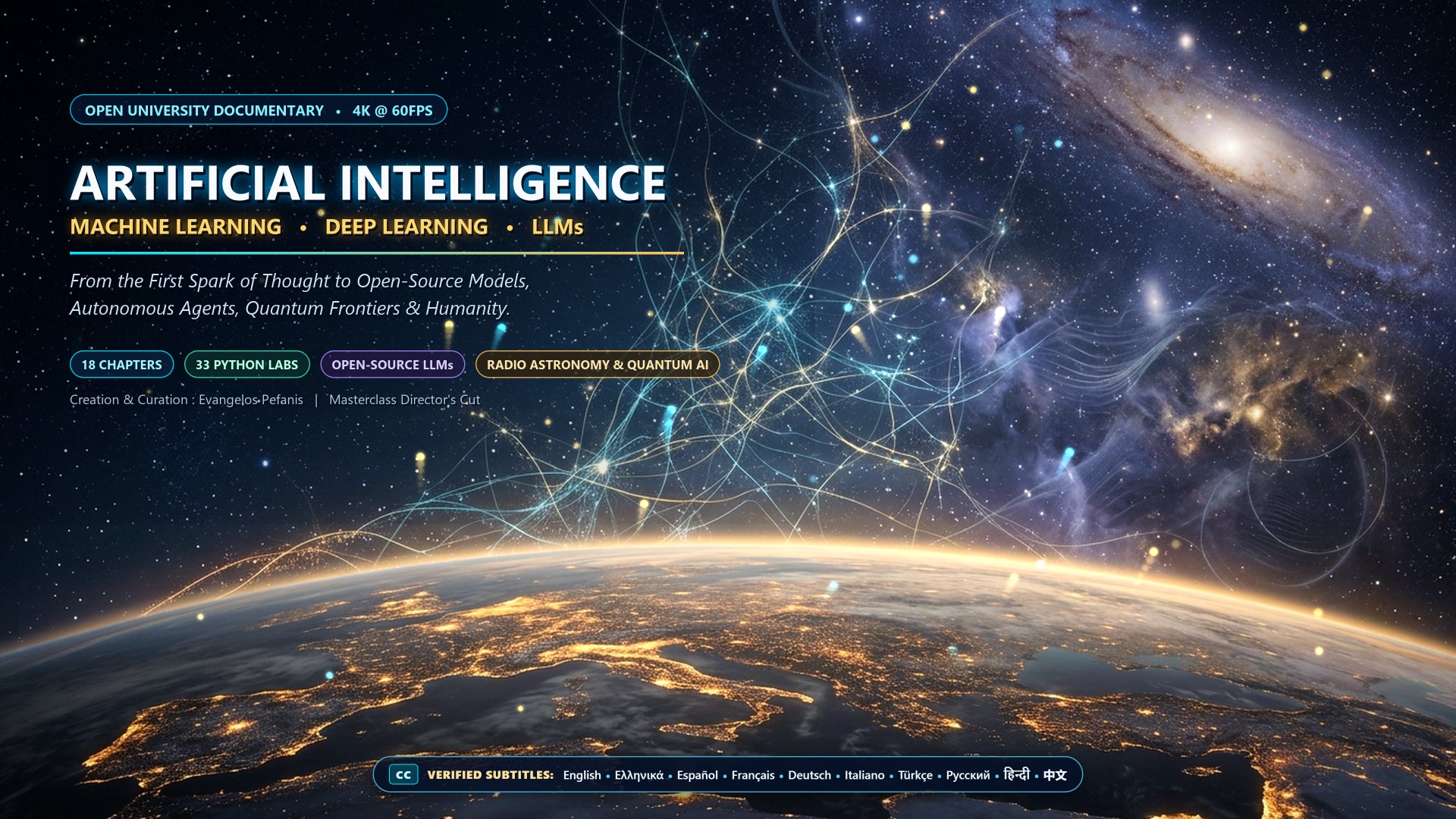
From the First Spark of Thought to Open-Source Models, Autonomous Agents, Radio Astronomy, Quantum Frontiers & Humanity.
Creation & Curation : Evangelos V. Pefanis | Open Educational Documentary (93 min, 4K @ 60fps)
Dedicated to All Who Seek Truth Through Research, Curiosity, and Creative Expression.
Every core mathematical barrier in modern AI is rendered directly inside the film as an animated 4K60 laboratory sequence. Click any cinema frame to inspect it in full resolution.
Watch vanilla SGD oscillate wildly across narrow ravine walls while adaptive Adam glides cleanly into the global minimum.
No straight line separates XOR in 2D: watch a hidden layer bend the manifold into 3D so one golden hyperplane slices at 100.0%.
Change one word from "tired" to "wide" and watch the query token "it" instantaneously redirect 86% of its softmax beam.
Group-wise Q4_K_M quantization compresses continuous FP16 weights into 16 crystal levels, collapsing 28 GB down to 5.3 GB at 99.1% fidelity.
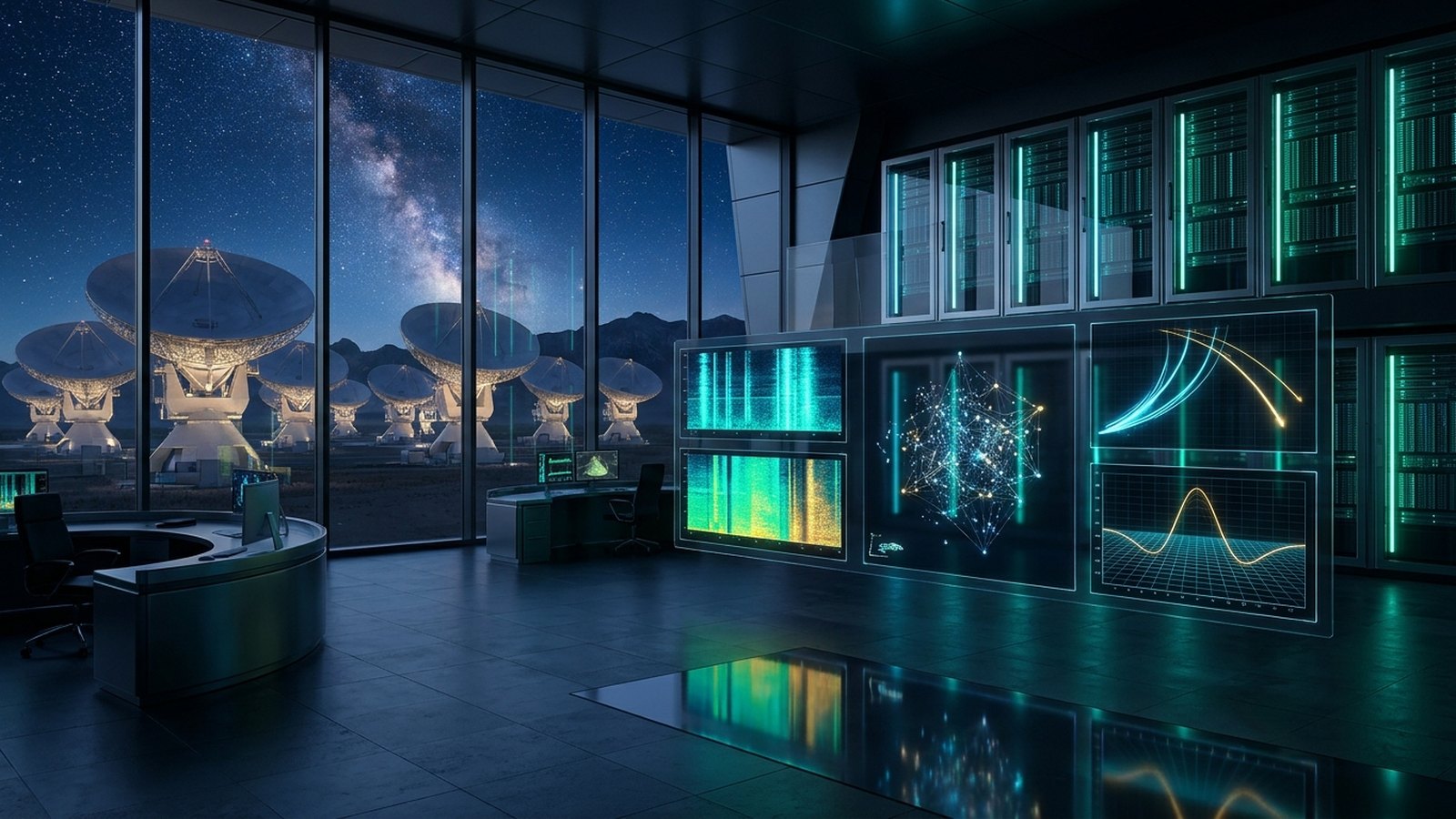
Align curved interstellar plasma delays into a sharp Fast Radio Burst peak and isolate 1.42 GHz drifting signals from local RFI.
Watch a qubit evolve smoothly across the 3D Bloch sphere in superposition |ψ⟩ = cos(θ/2)|0⟩ + e^(iφ)sin(θ/2)|1⟩, revealing quantum phase and measurement probabilities.
Experiment directly with the neural geometry and radio astronomy physics presented in the documentary. Zero plugins required.
Drag the hidden-layer warp slider to lift 2D XOR points into 3D (z = x · y) until the golden hyperplane slices both classes cleanly.
Toggle the final token and watch "it" dynamically recompute softmax(QK⊤/√d) across the sentence.
Switch weight precision and watch the Gaussian weight distribution quantize while GPU VRAM drops under the 12.0 GB RTX 3060 limit.
Sweep trial Dispersion Measure (DM) to cancel interstellar plasma 1/f² delay and maximize the cosmic burst SNR peak.
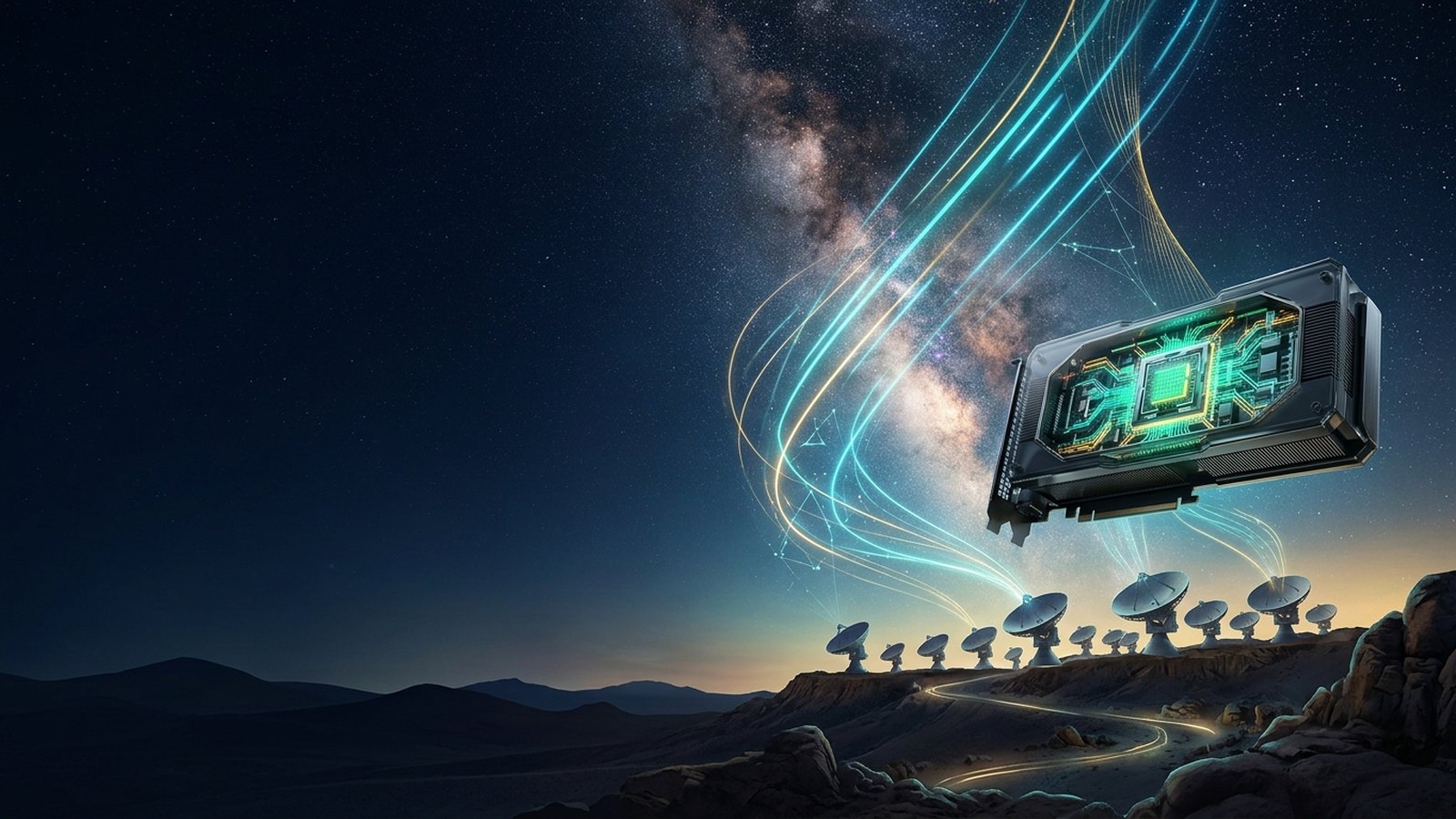
Listening across the Cosmic Water-Hole (1.420 to 1.662 GHz) on ONE consumer NVIDIA RTX 3060 (12 GB), using a hybrid SpectralResViTNet architecture, AMP BF16 mixed precision, and an interactive 4-tab 6-frame ABACAD cadence inspector.
Bridges domain-specialized Astro-LLMs (AstroSage-8B, AstroLLaMA, AION-1) with physical dispersion physics and reproducible local PyTorch 2 execution that any ECE student can run on a standard laboratory workstation.
Eighteen progressive modules combining mathematical foundations, live Python code walkthroughs, and applied scientific experiments.
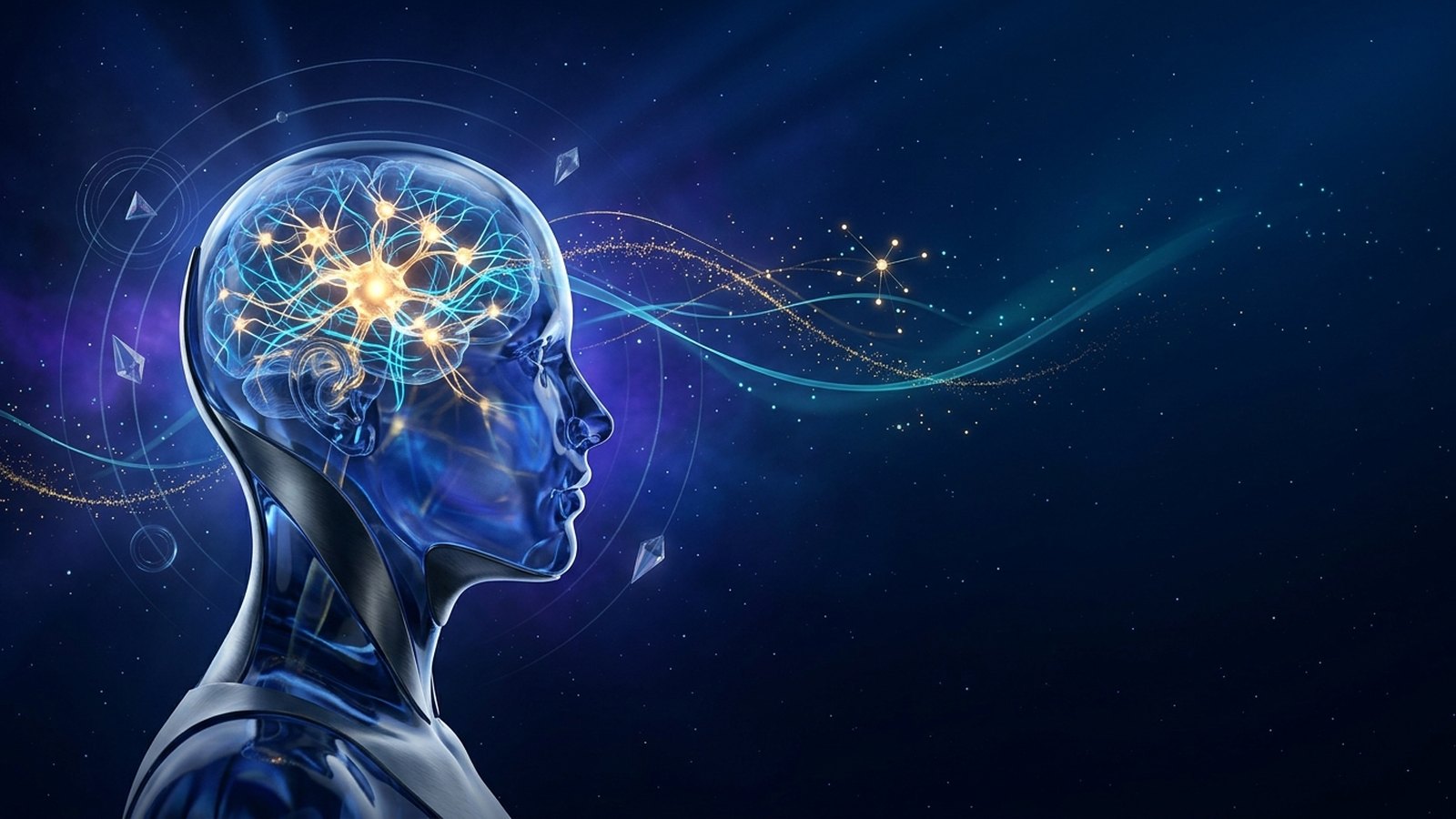
Biological sparks, activations, backpropagation, CNNs, LSTMs, and modern Transformers.
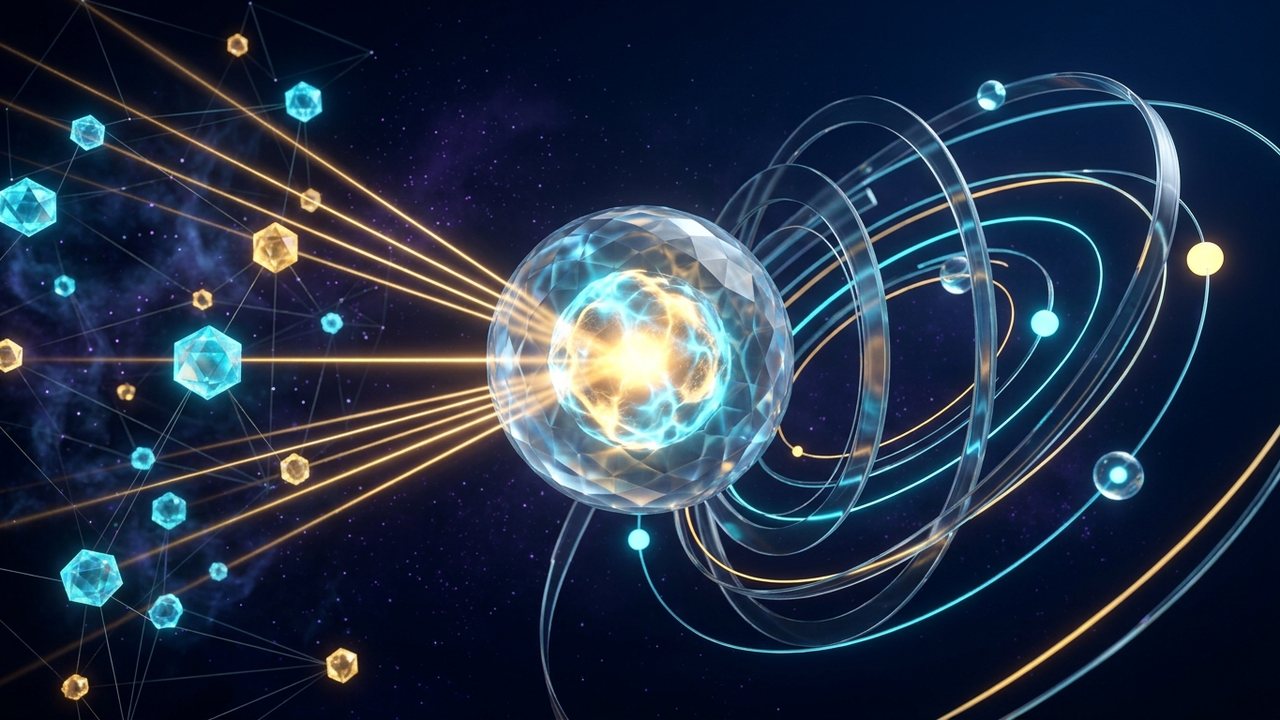
Ollama, GGUF Q4_K_M, vector embeddings, grounded RAG citations, and tool-using agents.
Sentiment-guided MIDI harmony, procedural art, and deep semantic analysis of "Astofos 1980".
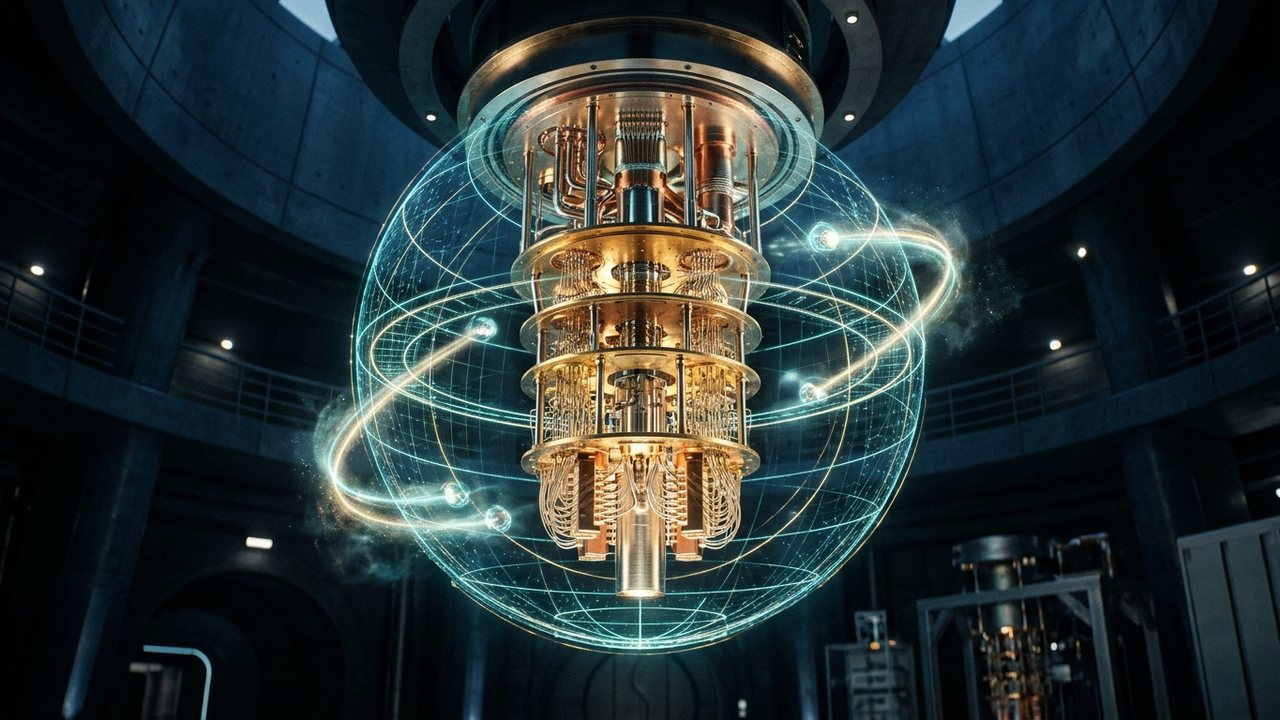
Trustworthy AI governance, qubits, surface error correction, and NIST post-quantum security.
Filter by topic or search any concept. Clicking any card jumps directly to that moment in the documentary once the YouTube link is active.
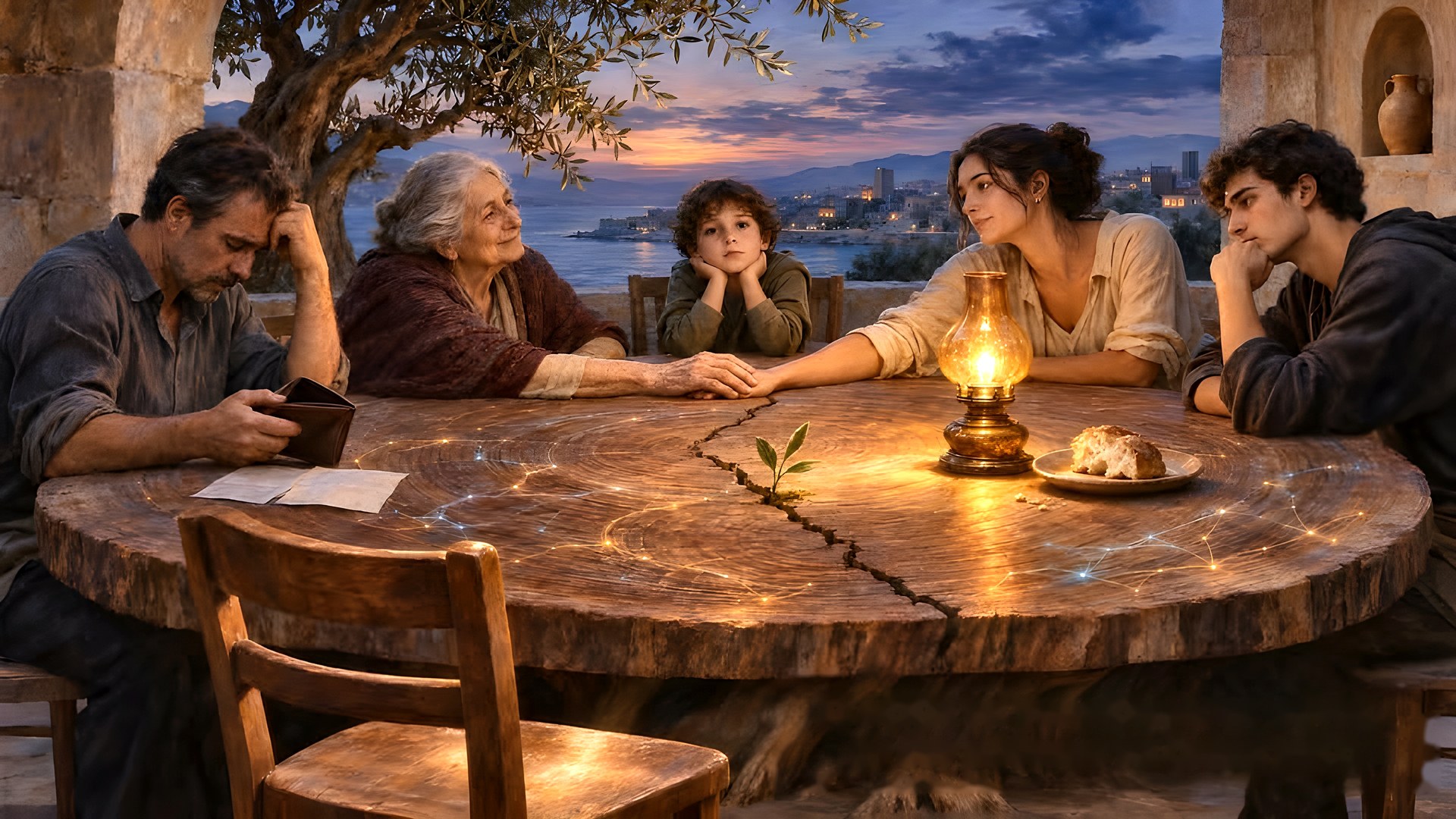
"What is it worth to know everything, if we forget why we are learning? In the foreground, an empty chair waits. Look closely: the child is looking straight at us, and their tomorrow is waiting for our answer."
Beyond tensors, gradients, and gigahertz radio signals, engineering remains a deeply human act. This open educational project was crafted with the aspiration that it serves as a substantive, modern, and inspiring compass for students and curious minds worldwide.
Watch the complete 93-minute documentary directly in 4K with integrated YouTube subtitles (CC) in ten languages, alongside the companion bilingual monographs and 33 Python 3.12+ laboratories.
Activate closed captions (CC) directly inside the YouTube player while watching to follow the documentary in English, Greek, Spanish, French, German, Italian, Turkish, Russian, Hindi, or Chinese.
Companion study textbooks in English (123 pages) and Greek (124 pages) containing equations, diagrams, and step-by-step commentary for every laboratory.
Executable PyTorch 2 and Keras 3 laboratories covering neural basics, CNNs, LSTMs, Transformers, local Ollama models, LoRA, RAG/MCP, weather forecasting, and Lab 33 Radioastronomy.
Faculty, researchers, and students are warmly welcome to cite this open documentary, its 33 laboratories, and bilingual monographs in courses, theses, and papers.
@misc{pefanis2026aimldl,
  author       = {Pefanis, Evangelos V.},
  title        = {Artificial Intelligence, Machine Learning, Deep Learning and Neural Networks: From Biological Sparks to Open-Source LLMs, Radio Astronomy and Quantum Frontiers},
  howpublished = {Department of Electrical and Computer Engineering, University of the Peloponnese, Patras, Greece},
  year         = {2026},
  url          = {https://artificial-intelligence-uop.pages.dev/},
  note         = {93-Minute Open Educational Documentary (4K @ 60fps), 6 Live Mathematical Visualizations, 33 Python 3.12+ Labs, 10-Language Subtitles, and Bilingual Study Monographs (123p EN / 124p EL)}
}